
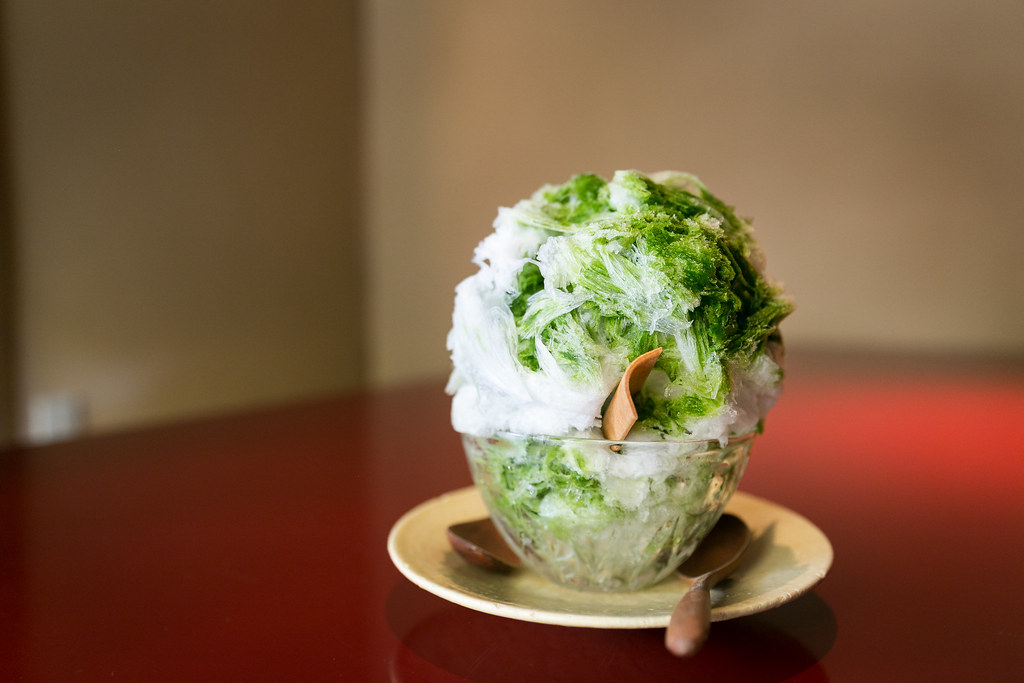

Ice shaved to order into snow, dressed in syrups made in our kitchen — one bowl, meant for sharing.
฿120 · Matcha ฿140 · Strawberry ฿140
What the house keeps.
A Japanese sweets & tea house — and a small storehouse of things worth taking home — kept one flight above the kamameshi kitchen.
n. — the storehouse a Japanese home keeps for what it means to last.
Every old Japanese house had a kura — a thick-walled storehouse where the family kept its best things: rice from the good year, tea, sweets for guests, the bowls reserved for people who mattered.
Harakura is that room, built above Harakama. The meal downstairs is cooked to order and eaten in its own time. Then you climb one flight of stairs, and the house opens its stores — dango grilled over charcoal at your table, ice shaved to order, anko made in small batches, tea poured from clay — and shelves of the goods we trust enough to cook with, offered to take home.
Same house. Same discipline. Turned toward sweetness.
Ice shaved to order into snow, dressed in syrups made in our kitchen — one bowl, meant for sharing.
฿120 · Matcha ฿140 · Strawberry ฿140

Grilled over binchōtan at your table, with our homemade sauces — mitarashi, anko, kinako.
Signature dango set ฿180

Small-batch anko, clear agar, chewy shiratama, fruit — finished at the table with kuromitsu, poured to taste.
฿160
Bracken-starch mochi, kinako, kuromitsu — cool and barely sweet.
Warm mochi under brown-sugar syrup and a snow of milk powder.
Stone-milled matcha, whisked to order — hot or over ice.
Hand-dripped, one cup at a time, kissaten-style.
A kura is not a shop; it is a keeping room. On the second floor, the goods we trust in our own kitchen — and a few things we simply could not leave in Japan — are set out to be taken home.
Sencha, hōjicha, genmaicha and stone-milled matcha — the teas we pour upstairs, tinned to travel.
Dashi, shōyu, kuromitsu, rice from Niigata — the quiet staples behind both floors.
Bowls, cups and lacquer chosen slowly, from makers whose work we use at the table.
Small seasonal arrivals and boxed sweets — for giving, or for keeping.
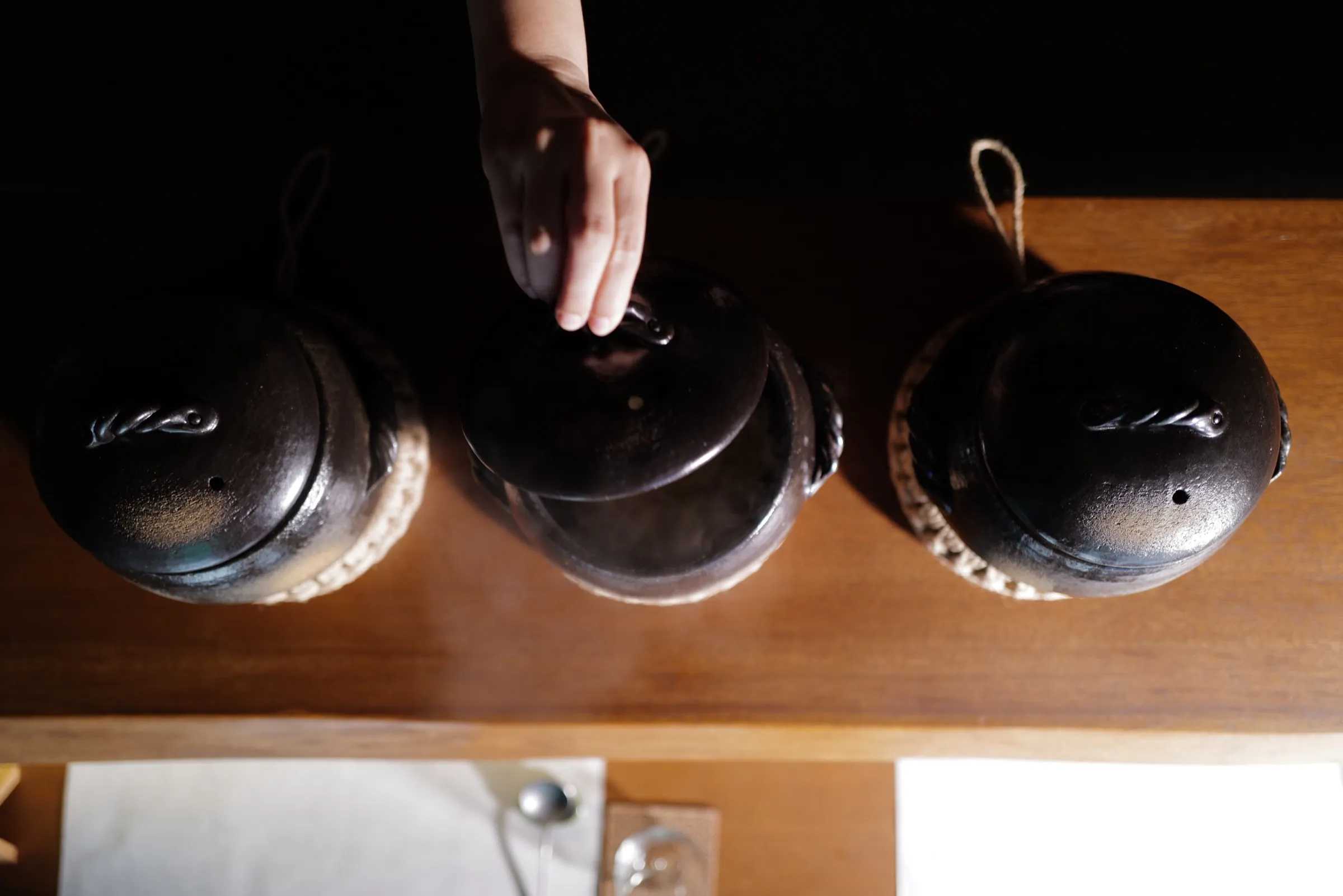
Thailand's first kamameshi house. Rice, dashi and iron pots — each meal cooked to order, given its thirty minutes.
harakamafoods.comSweets, tea, and the shelves. The slow end of the meal, and the part of the house you may take with you.
You are hereHarakura sits directly above Harakama, on Sukhumvit Soi 23. Come up after your meal downstairs — or come only for the sweet, the tea, and the shelves. No hurry either way.